
Tuesday, June 10, 2025
Self-Care After Acute Trauma: 9 Evidence Based Practices to Support Your Nervous System
Trauma doesn’t just live in the mind—it lodges itself in the body and nervous system. After a traumatic event, your system is flooded with stress hormones, your vagus nerve is often stuck in high-alert mode, and you may feel dissociated, numb, hypervigilant, or emotionally overwhelmed. What you do in the hours and days after a trauma matters. In fact, research shows that early, trauma-informed interventions can significantly reduce the likelihood of PTSD developing. Here are 9 science-backed, soul-soothing self-care tools to support your healing right now—no diagnoses or deep diving required. Just gentle, grounding, and effective practices to help your nervous system remember: you are safe now. These tools are not about fixing yourself—they’re about reclaiming your safety, one small, loving act at a time.

Self-Care After Acute Trauma: 9 Evidence-Based Practices to Support Your Nervous System
Trauma doesn’t just live in the mind—it lodges itself in the body and nervous system. After a traumatic event, your system is flooded with stress hormones, your vagus nerve is often stuck in high-alert mode, and you may feel dissociated, numb, hypervigilant, or emotionally overwhelmed.
What you do in the hours and days after a trauma matters. In fact, research shows that early, trauma-informed interventions can significantly reduce the likelihood of PTSD developing.
Here are 9 science-backed, soul-soothing self-care tools to support your healing right now—no diagnoses or deep diving required. Just gentle, grounding, and effective practices to help your nervous system remember: you are safe now.
Bonus Tip: Shake it out, if your body is shaking, trembling, and or your jaw is teeth chattering let it shake, this is one of the bodies natural responses in action!
1- Vagal Toning with Breathwork
Why it works: Your vagus nerve plays a central role in regulating your stress response. Stimulating it helps shift your body out of fight-or-flight and into a state of calm.
Try this:
Place one hand on your chest and the other on your belly. Inhale slowly through your nose for 4 counts, hold for 4, exhale through your mouth for 6–8 counts. Repeat for 2–5 minutes.
Bonus: Make a soft "vooo" or humming sound on the exhale to stimulate the vagus nerve further.
2-Havening Touch
Why it works: Havening is a psycho-sensory technique that uses gentle touch and distraction to reduce the emotional charge of traumatic memories. It literally helps de-link the emotional brain (amygdala) from the memory. Skin to skin contact is powerful and can also promote the release of oxytocin.
Try this:
Cross your arms and slowly stroke your upper arms from shoulders to elbows. You can also gently stroke your palms or cheeks. While doing this, hum a tune or repeat affirmations like “I am safe now.” Do this for a few minutes, especially when feeling overwhelmed.
3-Orienting to the Present
Why it works: After trauma, your brain may keep scanning for danger. Orienting is a gentle somatic practice that helps you come back into the now and assures your nervous system that it’s safe to relax.
Try this:
Look around the room and name 5 things you see, 4 things you hear, 3 things you can touch, 2 things you can smell, and 1 thing you can taste. Take it slow and breathe as you go.
4-Cold Exposure (But Just a Little!)
Why it works: Brief cold exposure—like splashing cold water on your face—activates the dive reflex and calms the nervous system. It also resets the vagus nerve.
Try this:
Splash cold water on your face for 10–30 seconds or place a cool compress on the back of your neck. This can be especially useful if you’re feeling dissociated or in a freeze state.
5-Weighted Grounding
Why it works: Trauma can cause a sense of floating or dissociation. Applying pressure to the body can help signal safety and bring you back into your physical form.
Try this:
Wrap yourself in a weighted blanket or place a heavy pillow across your lap or chest. You can also press your feet into the floor and say, “I am here. I am now.”
6-Tapping (EFT)
Why it works: Emotional Freedom Technique (EFT) helps regulate the amygdala and reduce cortisol. It’s simple, safe, and something you can do anywhere.
Try this:
Tap gently on the side of your hand (karate chop point) while saying: “Even though I’m overwhelmed right now, I deeply and completely accept myself.” Move through the tapping points (eyebrow, side of eye, under eye, etc.) with compassion.
7-Co-Regulation with a Safe Person or Pet
Why it works: The nervous system heals in relationship. Being near someone who feels calm and grounded can literally “lend” you their regulation.
Try this:
Talk to a trusted friend, ask for a hug, or spend time with a beloved pet. You don’t need to talk about the trauma—just let your body feel connection and safety.
8-Progressive Muscle Relaxation
Why it works: Trauma often causes muscles to tense up. Progressive muscle relaxation helps release stored tension and signals safety to the brain.
Try this:
Start at your toes and work your way up, gently tensing and then releasing each muscle group. Inhale as you tense, exhale as you release.
9-Don’t Force the Story—Focus on Sensation
Why it works: Recounting traumatic events too soon can reinforce fear pathways in the brain. Instead, focus on bodily sensations and emotional states with curiosity.
Try this:
Sit quietly and scan your body. Notice where you feel tightness, tingling, or heat. Name the sensation without judgment, and use breath or Havening to gently soothe those areas. Allow the body to tell its story in its own time.
Bonus Tip: Know When to Seek Support
If distress lingers beyond a few weeks or worsens, trauma-informed hypnotherapy, somatic therapy, or IEMT can help. You don’t have to do this alone.
Final Thoughts: Trauma can make the world feel unsafe and the self feel foreign. But with gentle, science-backed practices, you can support your body’s natural ability to process and release what happened—before it calcifies into chronic trauma or PTSD.
These tools are not about fixing yourself—they’re about reclaiming your safety, one small, loving act at a time.
See other posts like this one:







Monday, July 24, 2023
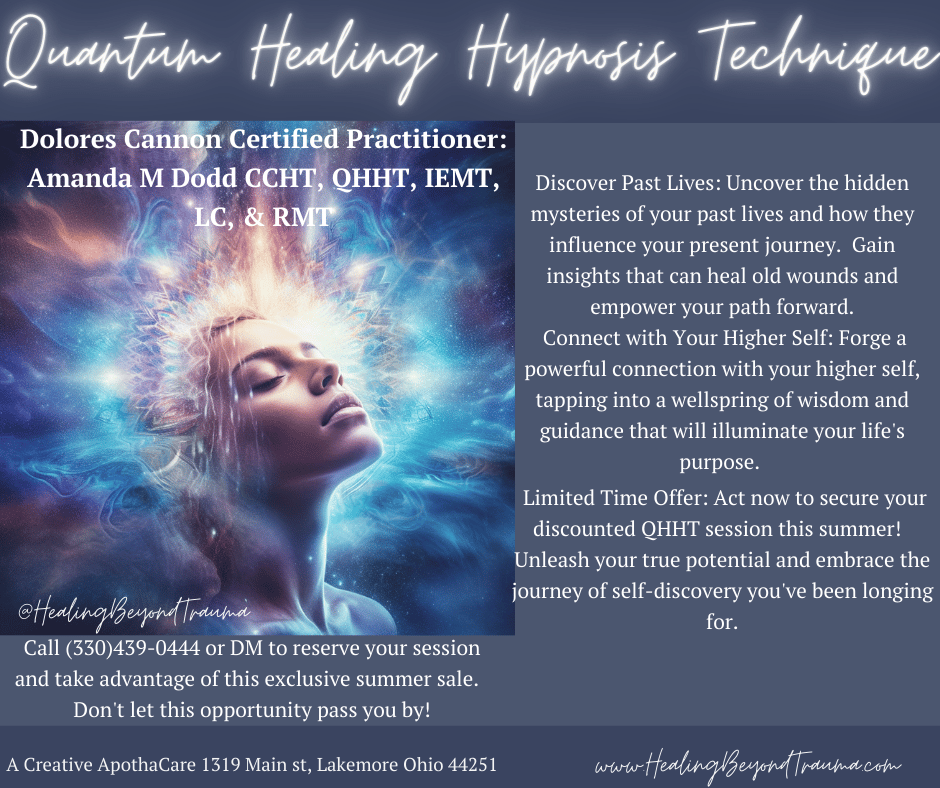
🌟 Unlock Your True Potential with Quantum Healing Hypnosis Technique 🌟



PAGES
© 2022–2027 Healing Beyond Trauma LLC. All rights reserved.
Amanda M Dodd
State Route 14, Streetsboro OH
amanda@healingbeyondtrauma.com
(330)595-9149